
18 September 2025
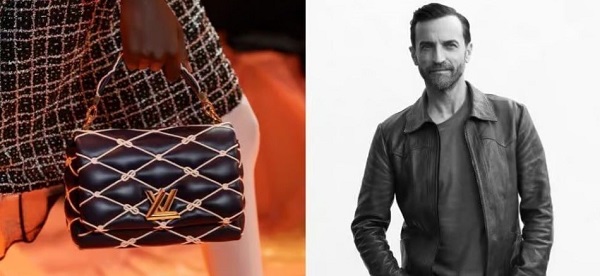
In the contemporary fashion landscape, the role of the creative director is no longer that of a solitary genius dictating trends from the heights of an ivory tower. Nicolas Ghesquière, who has led Louis Vuitton for over ten years, told Corriere della Sera. Today, he embodies a new role: that of a designer who is also adept at strategy, immersed in reality, capable of interpreting the present and anticipating the future. In an era where longevity is rare, his trajectory offers a valuable insight into how the profession of guiding the imagination of a global brand has changed, and continues to evolve. By La Conceria.
How it has changed
Ghesquière doesn’t speak of resistance, but of resilience. He doesn’t take refuge in aesthetics, but intertwines it with distribution and listening to the public. “When I started, the role was less tied to strategy, politics, and marketing.” His approach is that of a designer who has learned to dialogue with the system, without betraying his own vision. A paradigm shift compared to the beginning, when the creative director was primarily an aesthetic interpreter. Ghesquière, in fact, has led Louis Vuitton’s women’s division for over ten years and has experienced every phase of the industry.
Strategic skills
Today, that role has expanded to include strategic skills, political acumen, and the ability to read the market. The creative is no longer just an author, but an active interlocutor with corporate dynamics. Ghesquière puts it clearly: “Now they are normal parts of the job.” Louis Vuitton, with its mammoth structure, is the ideal breeding ground for this evolution. A structure that the creative has reworked, reorganizing ateliers, boutiques, and distribution, demonstrating that artistic direction is also about construction. A balance between intuition and method, between creative freedom and systemic responsibility. A balance that follows the evolution of feminine style.
“Connected to real life”
And then there’s the transformation of the creative director’s role itself. He’s no longer isolated and must be “connected to the real life of luxury.” “I travel, I talk to people, I go to boutiques and department stores, where I feel more anonymous. I like to observe, to touch,” the designer emphasizes. A human approach, in a world where artificial intelligence has forcefully entered the creative process. And an awareness, given that “prices are rising for many reasons: the cost of raw materials, labor, inflation. But now people are investing in pieces that last and that often gain value over time.” And perhaps it’s precisely this awareness, along with the ability to adapt without losing himself, that makes him one of the longest-serving creative directors of his genera
a