
4 June 2026
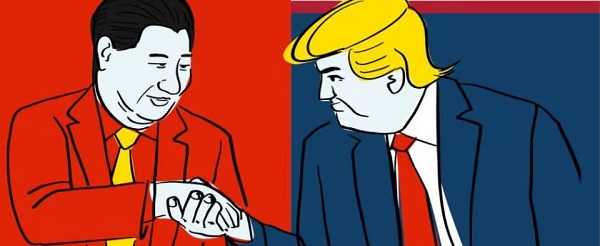
Attempts to thaw tensions between Washington and Beijing. And an agreement on the Washington-Brussels axis that avoids dangerous escalations. The White House’s trade diplomacy is hard at work and appears to be bringing order to a chaotic front: President Donald Trump’s state trip to China may have achieved less than some had hoped, but it’s a signal after months of threats and mutual vetoes. Is this a good thing? Up to a point, because as the Financial Times notes, the truth is that there are no winners in a trade war. By La Conceria.
Europe first
Approval from the European Parliament and Council is pending. Meanwhile, the Trilogue approved the ” Turnberry Pact,” the agreement the EU reached with the US last summer on trade relations. The outcome was not a foregone conclusion, as the EU partners first had to agree on the guarantees requested by the US side (such as the removal of certain import duties on US products). Meanwhile, the Trump administration threatened to raise tariffs to 25% on certain categories of goods if the Turnberry Pact was not ratified by July 2026. Therefore, the 15% tariff on imports to the US remains in place. As Avvenire reports, Brussels has nevertheless found a way to insert some guarantee clauses, such as one suspending the pact’s validity in the event of further impulsive actions by the US president.
But the Trade War has no winners
We’ve already written about some of Trump’s achievements during his trip to Beijing (May 13-15). Looking at the overall outcome, the FT editorial team isn’t exactly applauding: “The two sides promised to coordinate tariffs and trade (especially in the agri-industrial sector, ed.), but in a context where there was more pomp than substance. The key point, the newspaper notes, is that unlike in the past, when the US administration was capable of panicking its counterpart with tariff threats, Beijing has refined its defensive strategy. “It has a productive power that complements US needs,” it says, “which the US cannot do without, and it can respond, as it is already doing, with export restrictions.” The export ban puts the US’s capacity for intimidation in a corner, as well as the EU and Japan’s ambitions to exert pressure, the FT notes. And, above all, it has already set a precedent, as Iran demonstrated by responding to military aggression with an energy crisis. Who really benefits? Probably no one. Tariffs and export bans, the FT concludes sadly, are “weapons that lead to nothing good and that harm both those who shoot and those who are shot.”