
6 February 2026
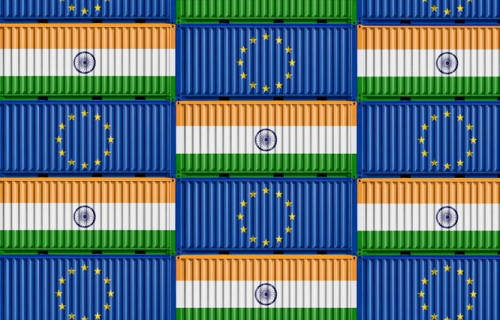
Key Indian export sectors including leather, apparel and manufacturing are seeking zero-duty access to the European Union as negotiations around the long-pending India–EU Free Trade Agreement (FTA) gather momentum. By ILM.
Industry leaders say tariff-free access would significantly improve India’s competitiveness in the EU, one of its most valuable export destinations. The Times of India (TOI) reported that Ramesh Juneja, Chairman of the Council for Leather Exports, said India’s leather exports to the EU could rise from around US$2.25 billion today to US$6 billion by 2030 if zero-duty access is secured.
Similarly, TOI reported that A Sakthivel, Chairman of the Apparel Export Promotion Council, noted that eliminating import duties would allow Indian garment manufacturers to better compete with exporters from countries that already benefit from preferential trade agreements with the EU. Apparel, leather goods and footwear currently face duties that can reach high single digits, eroding margins for Indian firms.
Reports across Indian business media highlight that these sectors are among those most vocal in urging the government to prioritise tariff elimination as part of the FTA talks. Industry bodies argue that zero-duty access would not only boost exports but also support employment and attract greater investment into export-oriented manufacturing.
Negotiations between India and the EU resumed in 2022 after a long hiatus, with both sides signalling interest in concluding a comprehensive trade agreement that covers goods, services and sustainability commitments.
It is worth noting that the proposed arrangement also highlights wider geopolitical and economic asymmetries. India has continued to source discounted energy from Russia to support domestic manufacturing, while the EU, having reduced its reliance on Russian oil and gas following the invasion of Ukraine, faces higher energy costs. This has led some bservers to question the optics of EU markets potentially granting tariff-free access to goods produced using lower-cost Russian energy, underscoring the complex and often contradictory realities shaping global trade in the current geopolitical climate.