
4 May 2026
For a footwear brand with 200 years of history, the challenge is not only how to preserve its heritage, but how to keep evolving without losing what made it relevant in the first place.
At APLF, Suresh Kumar Jagan, Global Head of Materials, Clarks, offered a grounded look at how one of the world’s most recognised footwear brands is navigating today’s sourcing landscape — from regionalised supply chains and leather upgrading to cost-sensitive sustainability and changing consumer expectations.
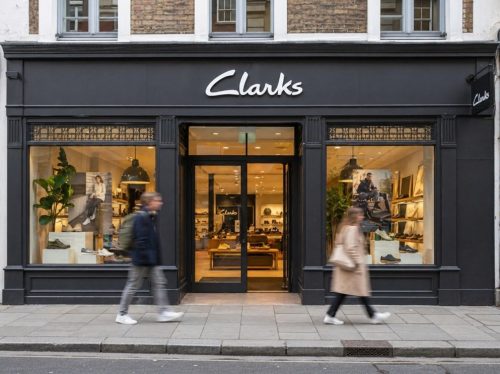
Suresh said: “Everybody knows about Clarks, and this year we are celebrating our 200-year anniversary. I don’t think many global brands have survived for 200 years. We are truly a global brand, with key markets including the UK, America, Japan, China, India, Australia and Europe. Originally, Clarks was known for black and brown shoes, but as the world changes, Clarks is evolving as well.”
Building Speed into the Supply Chain
Behind that evolution is a sourcing structure designed for a more complex global market. Clarks works through sourcing offices in Dongguan, Ho Chi Minh City and India, with around 25–30% of sourcing from India and nearly 70% across China and Vietnam.
For Suresh, who oversees global materials as well as Clarks India sourcing, one of the key priorities is building a more responsive supply chain.
Suresh explained: “One area we are focusing on is local-for-local: Chinese tanneries supplying Chinese shoe factories, and Indian tanneries supplying Indian shoe factories. It gives us a lot of flexibility, shorter lead time and much shorter reaction time when something sells really well. We do not need to wait one month for transit from China to India or from India to China.”
This shift reflects a wider change in how brands now think about sourcing. Cost still matters, but speed, flexibility and resilience are becoming just as important. For global footwear brands, the supply chain can no longer be built only around low-cost production. It must also be able to respond quickly to demand.
Leather Has Not Left the Conversation
Even as Clarks expands into new product categories and material combinations, leather remains central to the brand.
Suresh said: “Predominantly, we are still using leather, as leather shoes are still selling well.”
At the same time, the brand is adapting its material mix. Through ranges such as Cloudsteppers, Clarks is working with synthetic uppers and textile uppers, reflecting a more casual and modern product direction.

This does not mean leather is being replaced. Rather, Clarks is taking a more flexible approach: different materials for different products, markets and price points.
Suresh also highlighted growing interest in soft sheepskin for women’s uppers — a reminder that even within leather, comfort, softness, performance and value are becoming increasingly important.
Sustainability Has to Work Commercially
When the conversation turned to sustainability, Suresh was direct.
He said: “Sustainability is definitely a key factor for us, but at what cost is the matter.”
For Clarks, sustainability cannot simply become a premium story that pushes prices beyond what consumers are willing to pay. Retailers may want stronger sustainability narratives, and brands may want to improve their environmental credentials, but the final product still has to make commercial sense.
Suresh said: “What we do not want is sustainability storytelling where the customer has to pay 30 percent more. People should be very smart in developing a sustainability story at a cost the consumer can pay.”
This is a practical message for the materials industry. Sustainability claims alone are not enough.
Brands need solutions that are scalable, affordable and compatible with real product development.
Suresh gave a practical example: “If you take a TR sole or rubber sole and put 10 percent recycled material, the cost should come down, right? Suppliers should be cautious and smart enough in pitching the right price, so that the consumer can afford it.”
The next stage of sustainable material development will not be judged only by storytelling. It will be judged by whether sustainable options can compete on performance, price and supply reliability.
The Opportunity in Leather Upgrading
One of the key reasons Suresh came to APLF was to explore solutions around leather upgrading.
Suresh framed leather upgrading as one of the key areas Clarks is exploring: “What can we do on leather upgrading? How can we convert lower selection into better selection? How can we use recycled leather? How can we use foil transfer? These are the key initiatives for us in the coming months.”
This points to a more resource-efficient way of thinking about innovation. Not every solution has to begin with a completely new material. In many cases, the real opportunity lies in improving how existing materials are used.
For suppliers, this is where practical innovation becomes valuable. Helping brands reduce waste, improve yield, upgrade material appearance or extend the use of lower grades can have direct commercial impact.
One Brand, Different Market Realities
Clarks’ global business also means that product and material strategies vary by market.
According to Suresh, the UK and the United States remain the brand’s biggest markets. China is growing fast, while India is expected to grow quickly. Japan, meanwhile, is positioned as a premium market.
He said: “We adapt ourselves depending on the market.”
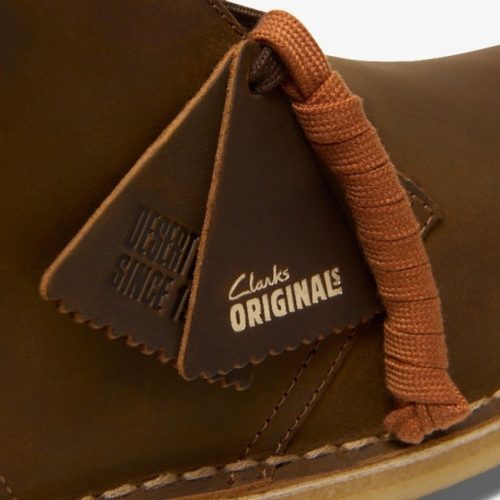
In Japan, Clarks sells more premium shoes. In the United States, the offer includes Originals, Cloudsteppers and essential products at accessible price points. In the UK, the brand focuses more on mid-price products.
This market-by-market approach matters for suppliers. A material that works for one region may not work for another. Price, product positioning, consumer preference and retail expectation all shape material decisions.
For global brands, sourcing is no longer only about finding the right material. It is about finding the right material for the right market, at the right cost, with the right supply chain behind it.
A Focused Return to APLF
Suresh returned to APLF after many years away. His impression was clear: the quality of the event has improved.
He also highlighted the efficiency of the business matching meetings arranged during the exhibition.
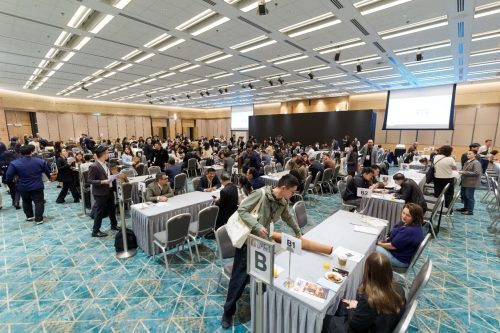
Suresh said: “I should thank you guys for inviting me and for organising all the meetings. It is quite efficient. When I go back to India and meet the Indian Shoe Federation guys, I will tell them how efficient you guys are and what we can learn from here.”
For a senior sourcing executive, this is where a trade fair creates real value. It is not just about walking the aisles. It is about meeting relevant suppliers, discussing current business challenges and identifying ideas that can be taken back into the sourcing process.