
25 March 2026
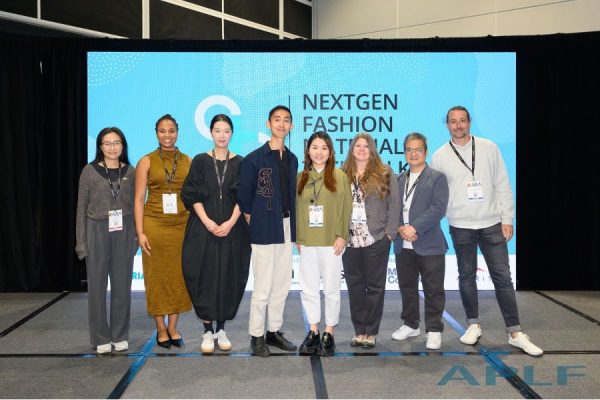
At Materials+ Hong Kong, material scientists, startups and industry leaders gathered to discuss the future of leather innovation, biomaterials and circular manufacturing — and the challenge of scaling sustainable materials for global fashion supply chains.
At this year’s Materials+ Hong Kong, the conversation around materials moved far beyond the traditional leather versus “vegan leather” debate. At the NextGen Fashion Material TechTalk, innovators, researchers and material startups gathered to examine how the next generation of materials can move from scientific discovery to industrial scale.
The programme, powered by Materials+, brought together pioneers working across biotechnology, circular materials and advanced leather innovation. The event was organised by Materials+, with The Mills Fabrica serving as Co-organiser, ISA Next-Gen Materials as Innovation Partner, and The Hong Kong Research Institute of Textiles and Apparel (HKRITA) together with Material ConneXion as Supporting Partners.
Across six presentations and a closing panel discussion, speakers explored a common challenge facing the industry: how to transform promising materials into viable commercial supply chains for fashion, footwear and leather goods.
Mapping the Future of Leather and Alternative Materials
Catherine Mondoa — Senior Materials Specialist, Material ConneXion
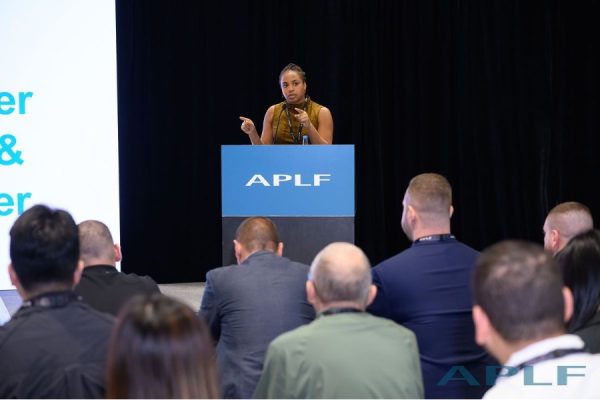
Opening the programme, Catherine Mondoa of Material ConneXion delivered a sweeping overview of the forces reshaping the global materials landscape.
Her presentation framed the current moment as a convergence of regulatory pressure, resource scarcity and brand sustainability commitments, all of which are accelerating the search for alternative materials while simultaneously pushing traditional leather innovation forward.
One of the most significant drivers is regulation. Mondoa highlighted the upcoming EU Deforestation Regulation (EUDR), which will require companies selling leather or related commodities in Europe to provide detailed traceability proving that materials are not linked to deforestation. The regulation comes into force in December 2026 for large companies and June 2027 for smaller businesses, creating a powerful incentive for brands to reassess sourcing strategies.
At the same time, stricter chemical standards — including limits on chromium VI, azo dyes and formaldehyde — are reshaping tanning processes worldwide.
But innovation is not confined to alternatives. Mondoa pointed to several breakthroughs in leather chemistry itself. Technologies such as Archroma’s AVICUERO® chrome-free tanning process reduce wastewater and eliminate pickling steps, while Zeology® tanning systems use naturally occurring minerals to replace heavy-metal tanning agents.
Alongside these developments, a wave of new materials is emerging. Examples include banana-fiber material developed by Banofi Biomaterials, which can cut carbon emissions dramatically, and Modern Meadow’s INNOVERA™ collagen-inspired materials, engineered from plant proteins and biopolymers.
Recycled materials are also gaining traction. Mondoa highlighted Pelinova® recycled leather, produced by bonding reclaimed leather fibers with Lyocell to create a fully bio-based composite.
Together, these technologies point toward a future where leather innovation, recycling and biotechnology converge, rather than competing with each other.
Scaling Bio-Based Materials Beyond the Lab
Ronda de Bie — SVP Sales, ISA Next-Gen Materials

If Mondoa’s presentation mapped the landscape, Ronda de Bie of ISA Next-Gen Materials addressed the industry’s most pressing operational challenge: scaling innovation.
While many biomaterials generate excitement during early development, few survive the transition from prototype to industrial manufacturing.
According to de Bie, success depends on three factors: manufacturing compatibility, supply chain integration and product design alignment.
ISA’s approach centres around COSM, a material platform designed to deliver bio-based materials that can perform under industrial conditions while maintaining durability, flexibility and visual quality.
Rather than treating new materials as simple substitutes for leather or synthetic alternatives, ISA advocates a design-first approach. In this model, brands develop products around the strengths of new materials rather than forcing them into legacy product structures.
The strategy reflects a growing shift across fashion and automotive industries, where companies are increasingly integrating materials innovation into product development from the earliest stages.
Ultimately, de Bie argued, the materials revolution will not be driven by science alone — it will depend on collaboration between innovators, manufacturers and brands capable of scaling production globally.
Turning Agricultural Waste into Luxury Materials
Youyang Song — Founder, Peelsphere

Among the most talked-about presentations came from Youyang Song, founder of biomaterials startup Peelsphere.
Peelsphere develops materials derived from fruit waste, algae and agricultural by-products, transforming these resources into bio-engineered surfaces designed for fashion, accessories and interior applications.
The company’s core technology separates micro-nano fibres from biological waste streams, which are then recombined into structured biomaterials capable of replicating the flexibility and durability required in fashion products.
Peelsphere’s product portfolio includes Algaeskin™, a translucent algae-based material, as well as Bestwaste™, a reinforced plant-based material designed for applications ranging from footwear to automotive interiors.
The startup has attracted significant attention from both luxury brands and sustainability investors. Peelsphere has been recognised through programmes such as Kering’s sustainability innovation initiatives, and has collaborated with partners including BMW, Balenciaga, Nike and Tiffany & Co. on experimental design projects.
These collaborations demonstrate a growing appetite among brands to explore biomaterials as part of future product strategies.
Song emphasised that the company’s goal is not merely to create alternatives to leather, but to build circular material systems where agricultural waste becomes a valuable industrial resource.
Mycelium Materials and the Rise of Bio-Fabrication
Gigi Jung — Chief Strategy & Business Officer, MYCEL
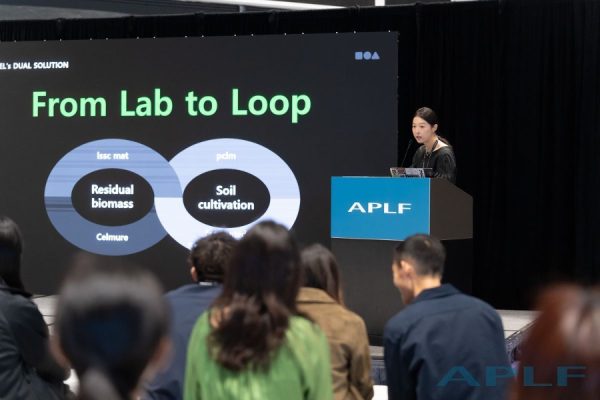
The conversation then turned to one of the most closely watched material frontiers: mycelium-based materials.
One of the most closely watched developments in material innovation today is the emergence of mycelium-based materials, and Gigi Jung of MYCEL shared how the technology is beginning to move beyond laboratory experimentation into industrial production.
MYCEL, a biotechnology company spun out of Hyundai Motor Company in 2020, develops materials grown from mycelium — the root-like network of fungi. Instead of being manufactured through traditional chemical or mechanical processing, the material is cultivated through biological growth, forming a naturally textured surface that resembles leather.
Jung explained that the company’s goal is not simply to develop an alternative material, but to build an industrial platform for bio-fabricated materials. MYCEL’s proprietary Liquid Surface Static Cultivation (LSSC) technology allows mycelium sheets to grow through controlled fermentation, producing materials with consistent structure and performance.
The company’s pilot facility currently produces around 13,000 sheets annually, while its next-stage manufacturing system is designed to scale production to approximately 500,000 sheets per year using renewable energy.
MYCEL’s material platform includes LSSC MAT™, a pure mycelium material grown without synthetic coatings, and CELMURE™, a multi-layer material system containing up to 95–99% mycelium engineered for strength and flexibility.
Jung emphasised that the future of materials will depend not only on innovation but on scalable systems that integrate biology, manufacturing and circular design.
Biodegradability as the Missing Piece of the Materials Debate
Ricky Kwan — Director & Co-Founder, MM Limited
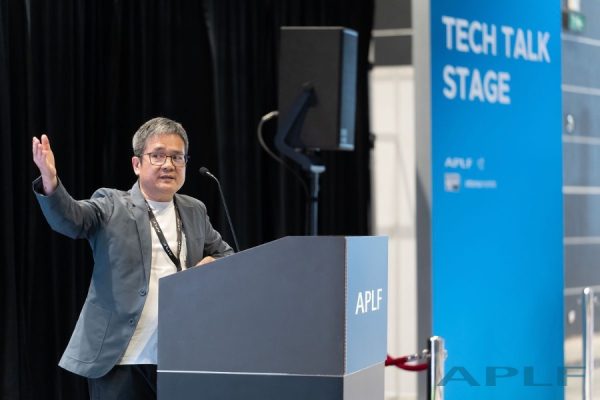
While many discussions around sustainable materials focus on bio-based content, Ricky Kwan of MM Limited argued that the real issue lies in end-of-life impact.
Many materials marketed as “vegan leather” still contain significant plastic content, making them difficult to degrade.
MM Alternative Leather takes a different approach. The material is produced using FSC-certified paper and BCI cotton fabrics, resulting in a plant-based material designed to mimic the look and feel of leather while remaining biodegradable.
Crucially, the material has been tested under ISO 14855-1 composting standards, achieving over 90% biodegradation within 180 days.
Kwan also presented a circular supply model developed in partnership with the hospitality sector.
Used hotel bed sheets are recycled into cotton fibres, which are then converted into base materials for MM leather alternatives. These materials are then transformed into new leather goods and supplied back to hotels, creating a closed-loop material system.
The model highlights how material innovation must extend beyond production to include waste management and circular supply chains.
Nuvi: Challenging the Narrative Around Leather Alternatives
Christophe Cappon — Co-Founder, Nuvi
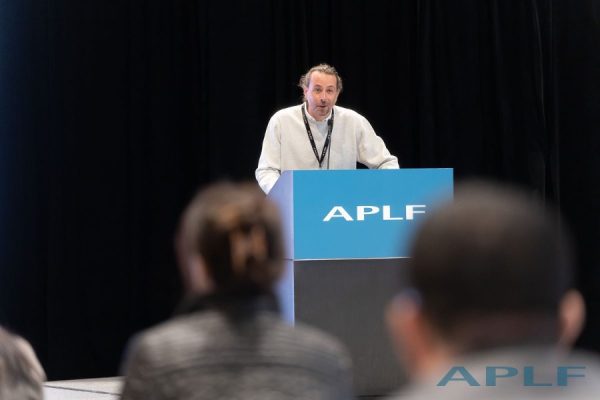
Closing the presentation series, Christophe Cappon of Nuvi delivered a provocative critique of the current materials debate.
Nuvi’s presentation explored the environmental trade-offs behind both traditional leather and plastic-based alternatives.
Through bold messaging such as “No Beef,” “Plastic Pandemic,” and “Nothing Like Leather,” Cappon challenged the industry to look beyond marketing narratives and examine the full lifecycle impact of materials.
Many synthetic alternatives marketed as sustainable still rely heavily on petroleum-derived polymers, raising questions about microplastics and long-term environmental impact.
Rather than attempting to replicate leather perfectly, Cappon suggested that designers should embrace new materials with their own identities — creating new aesthetics rather than imitations.
Panel Discussion: Bridging Innovation and Business
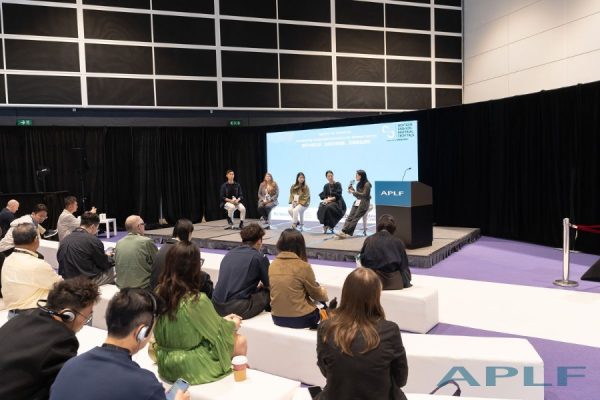
The programme concluded with a panel discussion titled “Together for Tomorrow: Accelerating Sustainable Innovations for Business Success.”
Moderated by Chaucer Ma of The Mills Fabrica, the panel brought together speakers from across the programme.
Participants agreed that the biggest obstacle facing next-generation materials is the “valley of death” between innovation and industrial scale production.
Many startups develop promising technologies but struggle to secure the manufacturing capacity, funding and supply chain partnerships needed to reach commercial scale.
The discussion also highlighted the role of design. Brands seeking to adopt new materials must rethink product development strategies rather than treating innovations as direct replacements for existing materials.
Ultimately, the panel reinforced a message that echoed throughout the TechTalk: the future of fashion materials will depend not only on scientific breakthroughs, but on collaboration across the entire ecosystem — from research labs to factories to fashion houses.