
24 October 2025
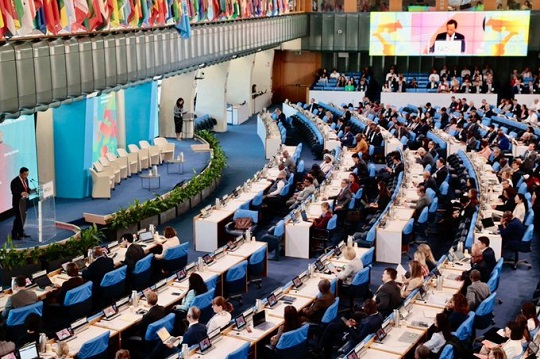
Finishing on October 1, the Food and Agriculture Organization of the United Nations (FAO) recently hosted its second Global Conference on Sustainable Livestock Transformation, highlighting the sector’s vital role in food security, livelihoods and sustainable development. Report by ILM.
Held at the FAO headquarters in Rome, the three-day event brought together more than 1,000 stakeholders including policymakers, farmers, companies, researchers and NGOs. Under the theme Fostering Change, Scaling Innovations, Driving Solutions, the conference aimed to shift the focus from dialogue to practical action, showcasing innovations in low-emission livestock systems, animal health and welfare, sustainable feeding and breeding, and climate change mitigation.
Livestock supports 1.3 billion people globally, account for 40% of agricultural GDP, and provide one-third of the world’s protein intake through animal-source foods. The sector is also central to rural incomes, women’s employment and resilience during crises.
Thanawat Tiensin, Assistant Director General of the Animal Production and Health Division at the FAO, met with leather industry leaders Dr Kerry Senior, Director at Leather UK and ICT (International Council of Tanners), and Gustavo Gonzalez-Quijano, Secretary General of Cotance, to discuss the challenges for the leather and the opportunities for collaboration. In addition, Leather Working Group Executive Director Vanessa Podmore presented on establishing global traceability standards for deforestation-free leather.
During the event, FAO Director-General Qu Dongyu cited examples of farms around the world where manure is converted into clean energy, byproducts are repurposed into new materials, and animals are raised in healthy, humane conditions. He stressed that adopting good practices can make livestock systems truly sustainable: “The lesson is clear – and science confirms it: When good practices are adopted, livestock systems can be truly sustainable”.
Marking FAO’s 80th anniversary, the organisation also announced new initiatives, including the Global Challenge Programme for Transboundary Animal Diseases and ongoing efforts to eradicate Peste des Petits Ruminants by 2030.