
15 September 2025
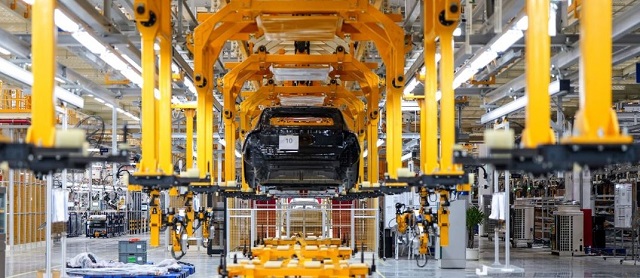
Changan Automobile Factory for EV Production located in Rayong Province, Thailand
Introduction
One of the main drivers of leather demand in China and Southeast Asia is the automotive sector. In China, in 2025, with total vehicle sales estimated to reach 32.9 million units, up to 8 million new vehicles could be fitted with leather seating and interiors.
As detailed in this report, vehicle sales in the emerging economies of the ASEAN bloc are much smaller but are growing steadily driven by robust economies and increasing consumer living standards and disposable income.
This report highlights the potential for auto sales and the percentage of new units fitted or retrofitted with leather seating and interiors by country.
The ideal business platform from where suppliers of leather can gain access to the ASEAN auto market is APLF ASEAN, due to be held in Ho ChiMinh City, Vietnam, from 13 – 15 November. To participate or for more information contact the Organisers on [email protected]. Web page APLF ASEAN Vietnam.
Overview
The automotive market in the Association of Southeast Asian Nations (ASEAN) continued its journey of recovery in 2024, driven by post-pandemic consumer confidence, industrial resilience, and robust intra-regional demand. While certain headwinds remain—such as supply chain disruptions, fluctuating currencies, and evolving emission standards—the outlook for 2025 is generally positive across the region’s major markets.
Another emerging trend is the growing preference for higher trim levels, especially leather seating and upgraded interiors, as consumers seek greater comfort and status in their vehicle purchases.
ASEAN Auto Sales 2024 and Outlook 2025—Country Details
Indonesia
Indonesia remains the largest automotive market in ASEAN. In 2023, passenger vehicle sales totaled approximately 1.01 million units. For 2024, the Indonesian Automotive Industry Association (Gaikindo) indicated a slight increase, with new vehicle sales reaching around 1.05 million units. By 2025, projections suggest a further modest climb towards 1.10 million units, contingent on stable economic growth and consumer sentiment. Key growth drivers include government incentives for low-emission vehicles, and a push towards electrification in major cities.
Thailand
Thailand, the region’s automotive assembly hub, saw 2023 sales at roughly 775,000 units. For 2024, the Federation of Thai Industries (FTI) anticipated a rebound to around 800,000 units, as tourism and domestic demand recover. By 2025, sales could approach 850,000 units, spurred by additional investments in the electric vehicle (EV) sector and resilient export demand. The Thai market is also witnessing a shift toward premium SUVs and pickup trucks, with higher interior specifications gaining traction.
Malaysia
Malaysia’s automotive market is notable for its strong domestic brands and consistent consumer demand. 2023 vehicle sales reached a record 799,731 units, according to the Malaysian Automotive Association (MAA). For 2024, this figure remained steady at about 800,000 units, with a slight uptick to 820,000 units in 2025, led by replacement demand and new model launches. Some moderation may occur if interest rates rise or if consumer finance tightens.
Vietnam
Vietnam’s car market, while smaller than its neighbors, is rapidly expanding. New vehicle sales in 2023 totaled approximately 400,000 units. For 2024, analysts predicted sales of 430,000 units, with 2025 potentially reaching 480,000 units, supported by a burgeoning middle class, urbanization, and increased local assembly capacity.
Philippines
The Philippine auto industry continues its robust climb from pandemic lows, with 2023 sales at 429,807 units (Chamber of Automotive Manufacturers of the Philippines, Inc.). The 2024 result was 450,000 units, with 2025 expected around 470,000 units. Demand is supported by sustained remittances, infrastructure development, and an expanding ride-hailing sector.
Other Markets (Singapore, Myanmar, Cambodia, Laos, Brunei)
These markets are smaller in volume, with Singapore accounting for about 45,000-50,000 annual new vehicle registrations, heavily regulated through certificate-of-entitlement (COE) policies. Myanmar, Cambodia, Laos, and Brunei have much lower sales, with combined totals under 80,000 units per year, but are seeing gradual increases as economies stabilize and import regulations evolve.
Leather Seating and Interior Penetration in ASEAN
Across ASEAN, the penetration rate of vehicles fitted or retrofitted with leather seating and interiors varies significantly by country, market segment, and vehicle class.
On average, about 25-30% of new vehicle sales in ASEAN are factory-fitted or retrofitted with leather seating and interiors. The proportion is steadily increasing, reflecting consumer preferences for comfort, durability, and prestige, as well as the growing availability of customization options at both the factory and dealership level.
Sources