28 October 2026
APLF Report – Outlook and Perspectives for APLF ASEAN Indonesia 2026

The fourth edition of APLF ASEAN is scheduled for 17–18 November 2026 in Jakarta, bringing international suppliers closer to one of Southeast Asia’s largest manufacturing markets.
The central question is whether Indonesia and its ASEAN neighbours can sustain demand for leather, components, chemicals and machinery as global footwear and leather goods production continues to shift across Asia.
The outlook is broadly positive, although opportunities differ considerably between Indonesia, Vietnam and Thailand. Growth in footwear exports, domestic consumption and industrial investment will be important. So will competition from synthetic materials and pressure on manufacturers to improve productivity and environmental performance.
Indonesia: A Growing Manufacturing Market
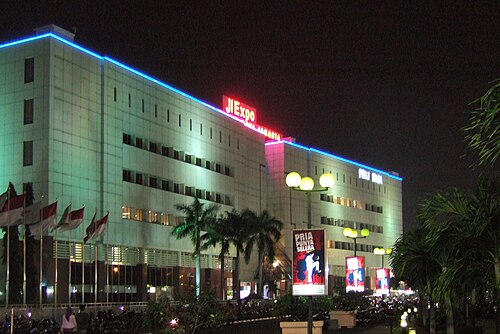
Indonesia has a population of approximately 288 million and combines a large domestic consumer market with an established export-oriented footwear industry.
Its manufacturing sector creates demand for finished leather, hides, chemicals, soles, components and production machinery.
Indonesia has 120 active tanneries, and this sector faces a structural raw material deficit, requiring the industry to import roughly 3 million pieces of cowhide and 15 million pieces of goat/sheep skin annually to supplement local supply. In terms of total value, Indonesia imported $US472 million in leather of other animals, based on most recent trade data.
However, the opportunity is not confined to leather itself. Manufacturers increasingly work with synthetic and textile materials, particularly in sports and casual footwear.
Indonesia’s total imports reached US$235.2 billion in 2024, an increase of 5.42%. Raw and auxiliary materials accounted for 72.58% of imports, illustrating the country’s dependence on international industrial supply chains. These are economy-wide figures, not leather-sector totals.
China is Indonesia’s largest overall import partner, accounting for 31.40% of imports in 2024, followed by Singapore at 9.16% and Japan at 6.37%.
In terms of Factories/Businesses, Indonesia has a total of 18,687 recorded footwear business units (consisting of 18,091 small-scale, 441 medium-scale, and 155 large-scale registered units), with over 250 primary formal/industrial manufacturing setups.
Indonesia produced approximately 782 million to 807 million pairs of footwear according to World Footwear Yearbook 2026 / recent Ministry of Industry data), ranking it 5th globally by production volume.
Out of total production, approximately 445 million pairs (around 55%) are exported annually, generating billions in export revenue reaching roughly US$5.16 billion to over US$6.4 billion.
For APLF ASEAN, this suggests opportunities for Chinese and regional component suppliers, alongside European companies specialising in leather, chemicals, machinery and higher-value manufacturing processes.
Vietnam and Thailand: Different Sources of Demand
Vietnam remains an important export manufacturing centre for footwear and bags. Its factories serve international brands and require reliable supplies of materials, components and production technology.
Thailand has a more diversified manufacturing structure, combining footwear and leather goods with automotive production and industrial applications.
Thailand’s Office of Industrial Economics expected exports of leather and tanned leather products to increase by 5.26% in 2024, while footwear and component exports were projected to grow by 3.63%. Vietnam, Indonesia and China were identified as important export markets for Thai leather products.
These regional connections matter. ASEAN should not be viewed as a single market, but as a group of manufacturing centres linked through cross-border trade.
Outlook for 2027–2032
The wider economic outlook provides grounds for cautious optimism. The Asian Development Bank forecasts growth of 4.7% in developing Southeast Asia in 2026 and 4.9% in 2027. Its July projections placed Indonesia at 5.2% growth in both years, compared with 7.0% for Vietnam and 2.0% for Thailand in 2027.
These forecasts concern the overall economy, not leather specifically. Nevertheless, sustained industrial activity should support demand for footwear materials, chemicals, components and machinery over the following five years.
Growth in leather consumption itself is less certain. Synthetic materials continue to gain market share, while energy costs, environmental requirements and international trade policies may affect investment decisions.
Indonesia’s attraction lies in the combination of its domestic market, manufacturing capacity and access to neighbouring ASEAN economies.
For APLF ASEAN 2026, the opportunity is therefore broader than selling finished leather. It is to connect international suppliers with a regional manufacturing industry seeking better materials, more efficient production and reliable trading partners.
The prospects are encouraging, but the strongest growth may come from the wider footwear and materials supply chain.
Sources
- Asian Development Bank – Asian Development Outlook, September 2026 https://www.bps.go.id/en/publication/2025/07/07/526bc1e0e937d64b8b2a8e61/statistik-perdagangan-luar-negeri-indonesia-impor-2024-buku-i.html
- Asian Development Bank – Asian Development Outlook, July 2026 https://www.adb.org/outlook/editions/july-2026
- ASEAN Statistical Highlights 2025 https://www.aseanstats.org/publication/ash2025/
- Statistics Indonesia – Foreign Trade Statistics, Imports 2024 https://www.bps.go.id/en/publication/2025/07/07/526bc1e0e937d64b8b2a8e61/statistik-perdagangan-luar-negeri-indonesia-impor-2024-buku-i.html
- World Bank WITS – Indonesia’s Leather Articles Imports by Trading Partner (2024) https://wits.worldbank.org/trade/comtrade/en/country/IDN/year/2024/tradeflow/Imports/partner/ALL/product/420500
- Thailand Office of Industrial Economics – Footwear and Leather Product Industry https://www.oie.go.th/assets/portals/1/files/monthly_report/anualreport2024_outlookfor2025.pdf